
Best Activities in Costa Blanca for Tourists and Travelers
Sun, sea, spectacular rock formations, villages that look like postcard stills and a food culture that worships rice — Costa Blanca is one of Spain’s most generous holiday regions. Stretching along the Alicante coast, it’s a place where you can build a week of slow beach days, an action-packed adventure holiday, or a culture-and-food road trip that never stops surprising. Below I’ll walk you through the best activities, how to combine them, and practical tips so you get the most from your visit.
1) Start with the classics: beaches, promenades and the vibe of Benidorm & Alicante
If you’re visiting Costa Blanca you’ll want at least one blatant beach day. Benidorm’s Levante and Poniente beaches are two of the most famous stretches of sand in the area — Levante buzzes with activity, bars and watersports; Poniente is broader, calmer and great for families and long strolls along the promenade. For city-beach contrast, Alicante’s Postiguet and San Juan beaches offer golden sand a short ride from the historic centre. These urban beaches are perfect for combining castle visits or shopping sprees with a midday dip.
Why it works: Visiting Costa Blanca coastline is forgiving — long sandy beaches, accessible promenades and plenty of cafés make it easy to mix rest and exploration in a single day.
What to pack: reef shoes if you plan to explore rocky coves, a lightweight cover-up for sun protection, and a good SPF.
2) Sail to Tabarca: the small island with a marine reserve (half-day trip)
One of the region’s most satisfying day trips is the boat ride from Alicante to Tabarca Island — a tiny inhabited island and protected marine reserve. Boats run daily (shorter speedboat trips and longer ferry options), and most tours combine a scenic crossing with a guided walk of the stone village, free time to swim, and snorkeling in clear seabeds where fish are abundant. It’s easy to do as a half-day excursion and a brilliant pick for families, snorkel beginners and anyone who loves seaside villages with a slow pace.
Insider tip: take a snorkel tour that supplies masks and fins if you don’t pack gear — the underwater life is rewarding even for casual snorkelers.
3) Climb (or admire) the Peñón de Ifach and Calpe’s coves
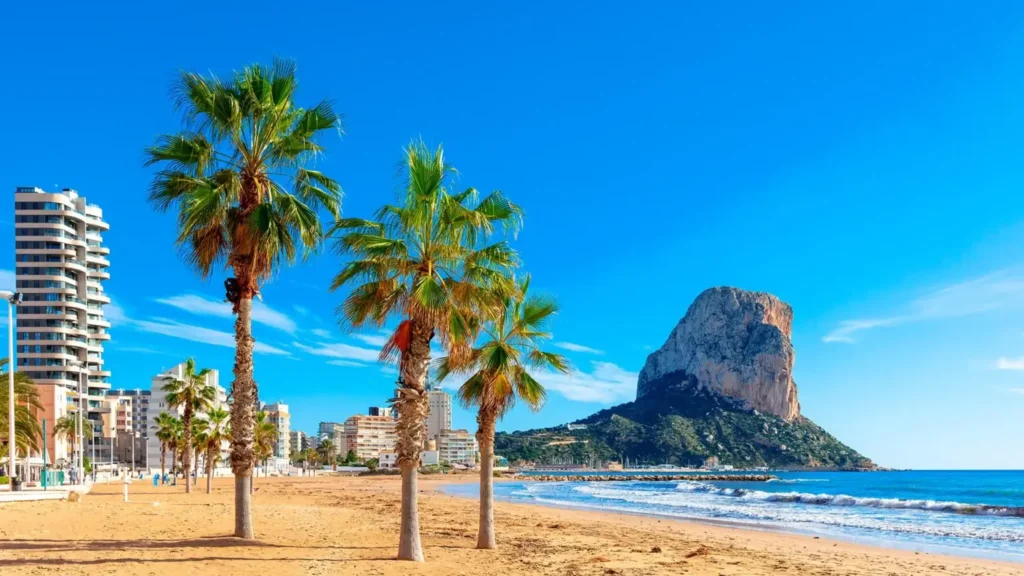
Calpe’s giant limestone rock, the Peñón de Ifach, dominates the north coast skyline — you can hike up to a cliff-top viewpoint for dramatic panoramas of the bay, or keep things low-key by visiting the beaches and working your way through the town’s excellent seafood restaurants. Nearby calas (small coves) invite swimming in clearer, spring-fed water than the busier beaches further south.
Best for: hikers who like short but steep climbs, photographers, and food lovers — Calpe’s fishing heritage means excellent seafood.
4) Serra Gelada Natural Park and the Albir lighthouse walk — easy coastal hiking
If you want an active day that still feels effortless, Serra Gelada Natural Park near Albir and Benidorm is your playfield. The paved walk to the Albir Lighthouse is well-signed and family-friendly; it winds up to viewpoints where the sea and coastline open like a map. For more challenge, Serra Gelada’s higher trails offer cliffs, sea caves visible from above, and extraordinary sunset vantage points. Bring water and sturdy shoes for the unpaved stretches.
How to plan it: morning hikes beat the heat in summer and the light is perfect for photos; combine with a beach lunch afterwards.
5) Guadalest — a hilltop micro-world of museums, viewpoints and slow food
Drive inland one day and you’ll feel like you’ve stepped into a storybook: Guadalest is a whitewashed mountain village clinging to a rocky spur with tiny museums, narrow alleys and panoramic terraces that peer over the reservoir and valley below. It’s compact and ideal for a half-day visit — explore the castle ruins, pop into the quirky miniature and local history museums, and linger for coffee on a viewpoint terrace. Guadalest is one of Spain’s most-photographed small towns for a reason.
Combine it with: Algar Waterfalls (a refreshing natural pool and walking area) for a full day of inland scenery.
6) Caving and underground cathedral: Canelobre Caves near Busot
If you want something very different, the Canelobre Caves are a short drive from Alicante and feel like an underground cathedral — huge chambers, impressive stalactites/stalagmites and the occasional classical music concert held inside due to the excellent acoustics. It’s a cool, atmospheric break from sun and sea and a dry, inclusive plan for hot afternoons.
Practical note: tours are guided and often timed; check opening hours, especially outside summer.
7) Adventure on the water: kayaking, cliff-jumping, scuba and sailing
Coastal adventures are easy to find on the Costa Blanca. Kayak and snorkel tours often combine sea caves and cliff-jumping spots (for the confident), while certified dive centres run wreck and reef dives from multiple ports. If you prefer gentler waters, charter a small sailing excursion or join a dolphin-watching cruise out of Alicante or Denia. Many operators tailor half-day and full-day trips to families or thrill-seekers.
Safety note: choose operators with solid reviews, lifejackets and clear safety briefings; tides and winds can change quickly in summer afternoons.
8) Food and drink: rice culture, seafood and market mornings
Costa Blanca’s culinary heart beats with rice. From arroz a banda (rice cooked in fish stock and served with fish on the side) to fideuà (a noodle version of paella) and arroz negro (squid-ink rice), the variety is astonishing — a rice dish tradition that stretches across coastal towns and inland villages. Fresh seafood markets in Denia, Alicante and smaller ports are where restaurants source their catch; simple beach chiringuitos (seafront bars) offer honest, delicious plates prepared with local produce. For deeper explorations, book a food tour or reserve a seat at a well-regarded local restaurant for a proper tasting menu.
Where to eat: Denia and Calpe are celebrated for seafood; Altea and Javea have excellent seafront restaurants that combine views with local dishes.
9) Theme parks, family days and animal parks (if you’re traveling with kids)
Costa Blanca offers a surprising number of family-focused attractions: Aqualandia and Aquopolis waterparks, Terra Mítica theme park, Mundomar marine and zoological park, and the interactive Terra Natura. These are easy day trips from Benidorm and Alicante and can be lifesavers during the hottest weeks of summer — or just a fun contrast to all the historical and natural sightseeing.
Tip: buy tickets online in advance for busy summer days; many parks run special shows/times that are best scheduled.
10) Salt flats, pink lagoons and birding in Torrevieja & Santa Pola
For something unusual and photogenic, head to Torrevieja’s salt lagoons (Laguna Rosa) and the salinas around Santa Pola. These large shallow salt ponds turn shades of pink at certain times of year and attract flamingos, herons and other waders. Birdwatchers and photographers will love the changing light and the contrast with industrial salt works and coastal birds. Combine a morning here with a seafood lunch in Santa Pola’s port.
Best time: migratory seasons (spring and autumn) concentrate bird activity, but flamingos can often be seen year-round.
11) Cultural festivals, markets and evening strolls
If your trip coincides with a local fiesta (Moros y Cristianos, Las Hogueras in Alicante, local feria nights), try to attend — these events combine parades, fireworks, traditional dress and long communal dinners. Weekly markets are also ubiquitous in towns and villages; they’re great for local ceramics, olives, cheeses and artisan goods. Evenings in Costa Blanca tend to be social and slow — the paseo (promenade) comes alive after sunset with families strolling, street musicians playing and tapas bars serving small plates.
Etiquette note: a relaxed pace is part of the pleasure — late lunches and long dinners are normal.
12) Sample itinerary suggestions (3, 5 and 7+ days)
Plan Your Trip to Costa Blanca, Spain.
Short getaway (3 days)
- Day 1: Alicante — Santa Bárbara Castle, old town tapas crawl and Postiguet beach.
- Day 2: Tabarca half-day boat trip; afternoon in Alicante marina.
- Day 3: Calpe — Peñón de Ifach viewpoint and seafood dinner.
Balanced week (5 days)
- Days 1–2: Benidorm for beach time + Serra Gelada lighthouse walk.
- Day 3: Guadalest and Algar Waterfalls day trip.
- Day 4: Calpe (Peñón) + local coves.
- Day 5: Denia/Altea for food, markets and sunset promenade.
Slow explorer (7+ days)
- Mix the above, add a day for Canelobre Caves and an inland village like Villajoyosa or the salt lakes of Torrevieja. Use slower days for food and beach lounging so you don’t burn out.
13) Practical travel tips
- Getting around: a car gives you freedom to explore inland villages and hidden coves; trains and coaches link main towns (Alicante, Benidorm, Denia) and local buses are serviceable.
- Best time to go: spring and autumn give mild temperatures, fewer crowds and perfect hiking weather. Summer is beach-perfect but can get hot and busy. Winter is mild and quiet — ideal for a slower, local experience. Happy Little Traveler
- Language: Spanish (Castilian) and Valencian are spoken — in tourist spots English is widely understood. Learning a few local phrases (hola, gracias) goes a long way.
- Money & tipping: cards are accepted widely, small cash for markets and beach kiosks helps; tipping is appreciated but not obligatory — 5–10% for good service is common.
14) Responsible travel & quick dos and don’ts
Do:
- Respect protected areas (marine reserves and natural parks) — take only pictures, leave only footprints.
- Try local dishes in small, family-run restaurants to support local economies.
- Carry reusable water and a sun hat on hikes.
Don’t:
- Touch or remove marine life when snorkeling; these are protected ecosystems.
- Underestimate the sun — coastal reflection can cause strong sunburns even on breezy days.
Final thoughts
Costa Blanca is wonderfully flexible: it rewards lazy beach hours, active hiking, foodie curiosity and family adventures equally. Whether you’re after crystalline coves and snorkeling, medieval hilltop villages, huge rice dishes that taste of the sea, or a lively promenade to watch the sun go down — you can easily weave all of that into a single trip. The region’s strength is variety: short transfers, friendly towns and a coast that changes character every 20–30 km.