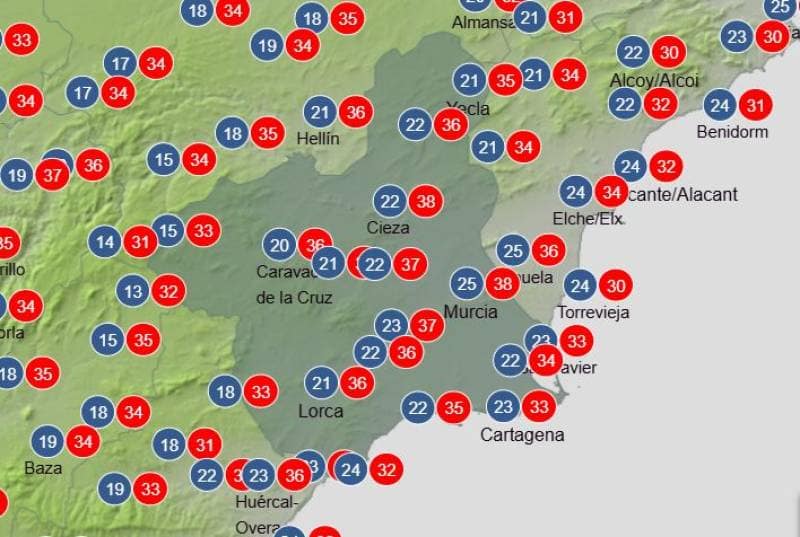
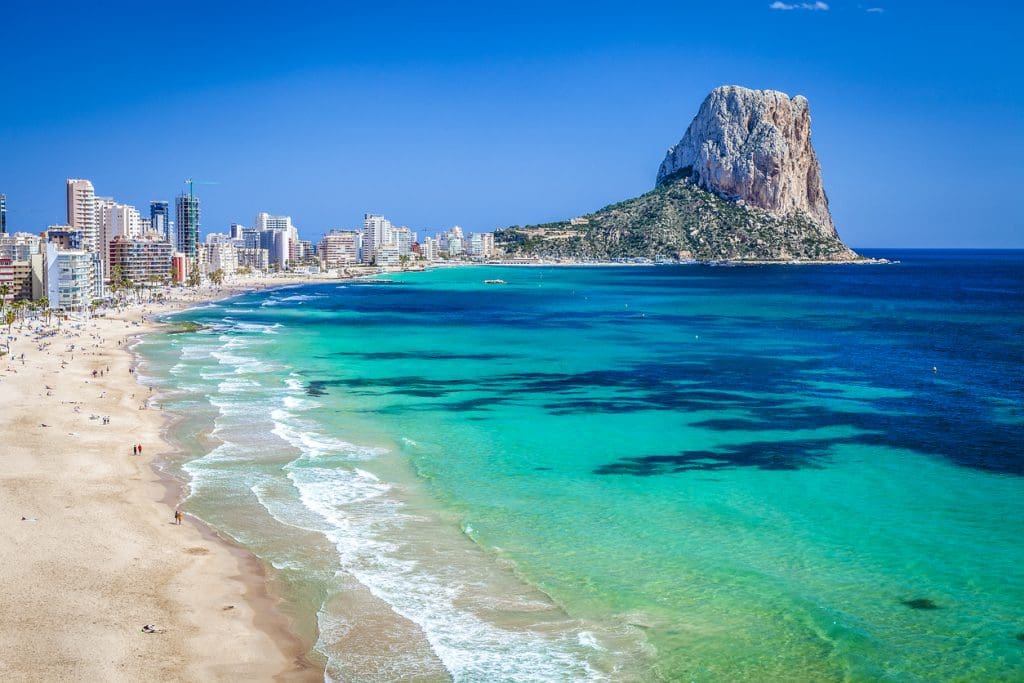
Weather in Costa Blanca

Discover Costa Blanca weather by month with average temperatures in °C and °F. A complete year-round climate guide for Alicante, Benidorm, Altea, Calpe, and all Costa Blanca towns.

Costa Blanca Monthly Weather – Weather by each Town

Costa Blanca Monthly Weather Overview (All Towns)

Average temperatures based on coastal and near-coastal towns including Alicante, Benidorm, Altea, Calpe, Jávea, Denia, Torrevieja, and Villajoyosa.

🌤 Monthly Temperature Table

MonthAvg Low °CAvg High °CAvg Low °FAvg High °F
January8°C16°C46°F61°F
February9°C17°C48°F63°F
March11°C19°C52°F66°F
April13°C22°C55°F72°F
May16°C25°C61°F77°F
June20°C29°C68°F84°F
July23°C32°C73°F90°F
August24°C33°C75°F91°F
September21°C30°C70°F86°F
October17°C25°C63°F77°F
November12°C21°C54°F70°F
December9°C17°C48°F63°F

Alicante Weather by Month

MonthLow °CHigh °CLow °FHigh °F
Jan8164661
Feb9174863
Mar11195266
Apr13225572
May16256177
Jun20296884
Jul23327390
Aug24337591
Sep21307086
Oct17256377
Nov12215470
Dec9174863

Benidorm Weather by Month

MonthLow °CHigh °CLow °FHigh °F
Jan9174863
Feb10185064
Mar12205468
Apr14225772
May17256377
Jun21297084
Jul24327590
Aug25337791
Sep22307286
Oct18266479
Nov13225572
Dec10185064

Altea Weather by Month

MonthLow °CHigh °CLow °FHigh °F
Jan9164861
Feb10175063
Mar12195466
Apr14225772
May17246375
Jun21287082
Jul24317588
Aug25327790
Sep22297284
Oct18256477
Nov13215570
Dec10175063

Calpe Weather by Month

MonthLow °CHigh °CLow °FHigh °F
Jan8164661
Feb9174863
Mar11195266
Apr13225572
May16246175
Jun20286882
Jul23317388
Aug24327590
Sep21297084
Oct17256377
Nov12215470
Dec9174863

Jávea (Xàbia) Weather by Month

MonthLow °CHigh °CLow °FHigh °F
Jan7164561
Feb8174663
Mar10195066
Apr12225472
May15255977
Jun19296684
Jul22327290
Aug23337391
Sep20306886
Oct16266179
Nov11225272
Dec8174663

Jávea benefits from the Montgó mountain, which moderates extremes.


Dénia Weather by Month

MonthLow °CHigh °CLow °FHigh °F
Jan8164661
Feb9174863
Mar11195266
Apr13225572
May16256177
Jun20296884
Jul23327390
Aug24337591
Sep21307086
Oct17256377
Nov12215470
Dec9174863

Torrevieja Weather by Month

MonthLow °CHigh °CLow °FHigh °F
Jan8174663
Feb9184864
Mar11205268
Apr13235573
May16256177
Jun20296884
Jul23327390
Aug24337591
Sep21307086
Oct17266379
Nov12225472
Dec9184864

Inland Towns Temperature

These towns sit slightly inland or at higher elevation, so they experience cooler winters and slightly milder summers than coastal resorts.


Guadalest Weather by Month (Inland Mountain Town)

Guadalest sits at higher altitude, surrounded by mountains, giving it cooler evenings and refreshing summer nights.

MonthLow °CHigh °CLow °FHigh °F
Jan5144157
Feb6154359
Mar8174663
Apr10205068
May13235573
Jun17276381
Jul20306886
Aug21317088
Sep18286482
Oct14245775
Nov9194866
Dec6154359

Best time to visit Guadalest:
👉 Spring and autumn are ideal for sightseeing and hiking.
🔗 Best Time to Visit Costa Blanca


Polop Weather by Month

Polop enjoys a sheltered inland position near the Sierra Bernia mountains, offering mild winters and pleasant summers.

MonthLow °CHigh °CLow °FHigh °F
Jan7154559
Feb8164661
Mar10185064
Apr12215470
May15245975
Jun19286682
Jul22317288
Aug23327390
Sep20296884
Oct16256177
Nov11215270
Dec8174663

Best time to visit Polop:
👉 April to June and September to October offer warm days without summer heat.


Finestrat Weather by Month

Finestrat combines coastal proximity with mountain elevation, creating balanced temperatures year-round.

MonthLow °CHigh °CLow °FHigh °F
Jan8164661
Feb9174863
Mar11195266
Apr13225572
May16256177
Jun20296884
Jul23327390
Aug24337591
Sep21307086
Oct17266379
Nov12225472
Dec9184864

Costa Blanca Weather by Month – Complete Guide for All Towns

The Costa Blanca enjoys one of the most stable and enjoyable climates in Europe, thanks to its Mediterranean location, coastal influence, and surrounding mountain ranges. Whether you visit coastal towns like Alicante, Benidorm, Altea, Calpe, Jávea, Denia, Moraira, Villajoyosa, or Torrevieja, the weather remains consistently pleasant throughout the year, with only gentle seasonal variations.

Below is a month-by-month breakdown of Costa Blanca weather to help travelers choose the best time to visit.


January – Mild Winter Sunshine

January is one of the mildest winter months in Spain. Daytime temperatures across Costa Blanca towns typically range between 12–18°C, with plenty of sunshine. While evenings can be cool, days are ideal for walking, sightseeing, and exploring historic towns without crowds.

Best for: city breaks, hiking, cultural travel, long stays
Rainfall: Low to moderate


February – Calm, Bright & Comfortable

February continues the mild winter pattern, with slightly increasing daylight hours. Coastal towns benefit from sea protection, keeping temperatures pleasant and frost-free. Almond blossoms begin to appear inland, adding natural beauty to the region.

Best for: photography, outdoor markets, relaxed holidays
Rainfall: Light and occasional


March – Spring Begins

March marks the start of spring, with temperatures rising to 16–20°C. The weather becomes noticeably brighter, and landscapes turn greener after winter rains. Coastal walks and mountain excursions become increasingly popular.

Best for: nature lovers, hiking, cycling
Rainfall: Short, scattered showers


April – Warm Days, Fresh Evenings

April offers some of the most balanced weather of the year. Daytime temperatures often reach 18–22°C, while evenings remain comfortable. Towns like Altea, Jávea, and Denia feel particularly pleasant, with clear skies and fresh sea breezes.

Best for: sightseeing, village exploration, Easter travel
Rainfall: Occasional, brief


May – Early Summer Feel

May feels like early summer across Costa Blanca. Temperatures climb to 22–26°C, and the sea begins to warm. Beaches become livelier, though still not overcrowded. This is a favorite month for travelers seeking sunshine without peak-season heat.

Best for: beach walks, swimming, outdoor dining
Rainfall: Very low


June – Perfect Mediterranean Weather

June brings long sunny days and temperatures around 26–30°C, moderated by coastal breezes. Sea temperatures are ideal for swimming, and towns come alive with festivals and evening promenades.

Best for: beach holidays, water sports, family travel
Rainfall: Rare


July – Hot & Dry Summer

July is hot and reliably sunny across all Costa Blanca towns. Daytime highs range from 30–34°C, especially inland, while coastal areas remain slightly cooler due to sea winds. Rainfall is extremely rare.

Best for: beach lovers, nightlife, festivals
Rainfall: Almost none


August – Peak Summer Heat

August is the hottest and busiest month. Temperatures can exceed 35°C inland, while coastal towns remain more comfortable. Warm sea temperatures and long daylight hours define this peak holiday period.

Best for: swimming, boating, summer events
Rainfall: Minimal


September – Warm & Relaxed

September combines summer warmth with fewer crowds. Temperatures settle between 26–30°C, and the sea remains warm. It’s one of the most pleasant months for extended stays and relaxed beach time.

Best for: couples, beach holidays, sailing
Rainfall: Low


October – Soft Autumn Sunshine

October brings cooler yet still warm days, averaging 22–26°C. Sea temperatures remain inviting, and the pace of life slows across the towns. Occasional short rain showers may occur but rarely disrupt travel plans.

Best for: sightseeing, hiking, photography
Rainfall: Moderate but brief


November – Mild & Peaceful

November transitions into a mild winter, with temperatures around 18–22°C. Sunshine remains frequent, especially along the coast. This is an excellent month for visitors looking to escape colder northern climates.

Best for: long stays, walking, cultural trips
Rainfall: Slightly higher than summer


December – Bright Winter Escape

December offers mild winter days with temperatures between 14–18°C. While evenings are cooler, daytime sunshine allows for outdoor activities, festive markets, and coastal strolls.

Best for: winter sun breaks, Christmas travel
Rainfall: Occasional


Weather Differences Between Costa Blanca Towns

  • Coastal towns (Alicante, Benidorm, Calpe, Torrevieja) enjoy slightly warmer winters and cooling sea breezes in summer
  • Northern towns (Jávea, Denia) may receive slightly more rain but also enjoy lush greenery
  • Mountain-protected towns (Benidorm, Altea) benefit from reduced wind and stable temperatures

Despite these variations, the climate remains favorable across the entire region year-round.


Why Costa Blanca Weather Is Ideal for Travel

  • Over 300 days of sunshine per year
  • Mild winters and manageable summer heat
  • Low rainfall compared to most of Europe
  • Perfect conditions for outdoor living and tourism

This climate consistency is a key reason Costa Blanca is popular with holidaymakers, retirees, and long-term visitors.

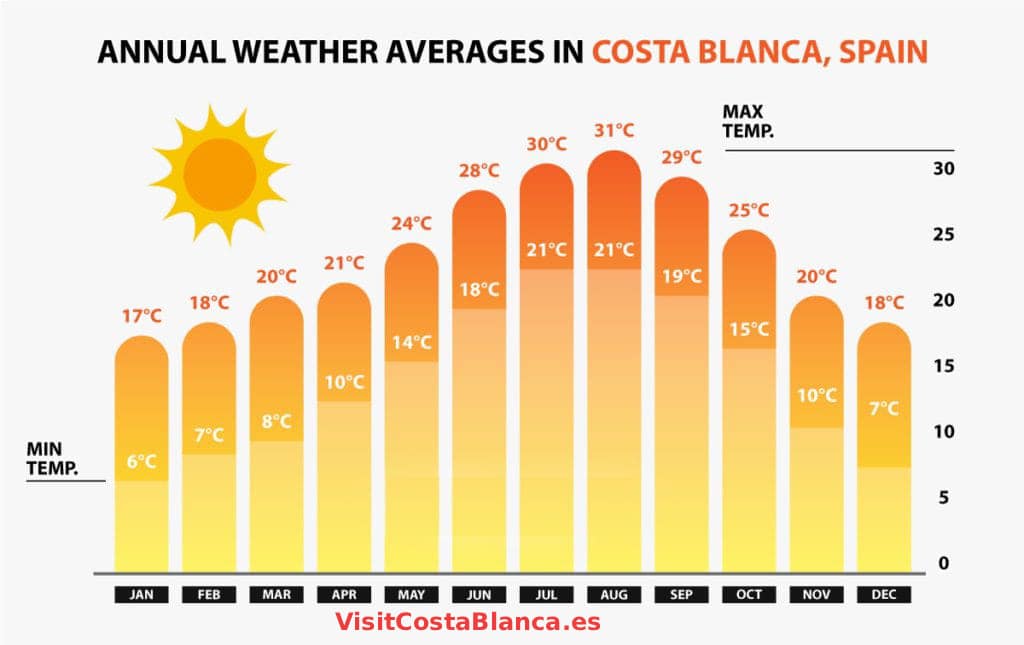
Weather in Costa Blanca – Detailed Climate Guide for All Towns

The Costa Blanca in southeastern Spain enjoys one of the most appealing climates in Europe, attracting visitors and residents year-round. Known for its long, sunny days, mild winters, and warm, dry summers, the region’s weather is shaped by its Mediterranean climate, glacially coloured seas, and protective mountain ranges. The result is exceptionally pleasant conditions that vary only moderately between coastal towns such as Alicante, Benidorm, Altea, Calpe, Jávea, Denia, Moraira, and others.


Classic Mediterranean Climate

Costa Blanca’s weather fits the Mediterranean classification, characterized by:

  • Long, hot summers
  • Mild, short winters
  • Low annual rainfall
  • High sunshine hours

With over 300 days of sunshine per year, this climate is one of the major reasons people visit or relocate to the region. Seldom do temperatures drop low enough to disrupt outdoor living, and snow in the coastal zone is almost unheard of.Costa Blanca.


Seasonal Weather Patterns

Spring (March – May)

Spring is one of the most delightful seasons on Costa Blanca. Daytime temperatures typically rise from around 15-17°C (59-63°F) in March to approximately 20-24°C (68-75°F) by May. Spring brings mild warmth and blooming landscapes, ideal for sightseeing, hiking, and visiting villages and nature parks. Rainfall may occur but is generally light and short-lived.

Summer (June – August)

Summers are long, dry, and reliably sunny. Daily highs commonly range between 28-35°C (82-95°F), especially in inland locations, while coastal sea breezes moderate heat along the shore. Sea temperatures peak at around 25-27°C (77-81°F), perfect for swimming and water sports. Rainfall in these months is minimal, and humidity remains moderate.

Autumn (September – November)

Autumn brings warm but slightly cooler weather than summer, with highs around 20-28°C (68-82°F) in early autumn and progressively cooler days toward November. The sea stays warm well into October, and occasional rainfall increases compared to summer but is typically short and intense rather than prolonged.

Winter (December – February)

Winters are mild along the Costa Blanca coast, with average daytime temperatures ranging between 12-18°C (54-64°F). Even in December and January, sunny days are frequent, enabling outdoor activities such as promenades, markets, and cultural exploration. Nights can be cooler, and rainfall is more common than in summer but still moderate in overall volume.


Climate Across Major Costa Blanca Towns

Alicante

Alicante is one of the sunniest spots on the Costa Blanca, with over 320 sunny days a year. Summers are hot and dry, rarely dipping below 10°C (50°F) in winter. This town enjoys a semi-arid, microclimate influenced by nearby hills, resulting in low annual rain days—often fewer than 20 rainy days annually—and consistently pleasant conditions for year-round outdoor life.

Benidorm

Benidorm benefits from a unique microclimate influenced by surrounding mountains, often resulting in warmer winters and slightly more humid summers than other nearby towns. The protection afforded by hills also tends to reduce the impact of cold northerly winds, making it one of the most comfortable year-round climates on the Costa Blanca.

Altea

Altea enjoys the same Mediterranean warmth, with plentiful sunshine and mild temperatures. Spring and early autumn in Altea can feel especially pleasant, with daytime highs reaching the mid-20s °C (mid-70s °F) and cool, comfortable evenings. The sea warms early in summer and stays moderate into autumn.

Calpe

Calpe follows typical Costa Blanca weather patterns—hot, dry summers and mild winters. Average daytime highs in winter are around 15-17°C (59-63°F), and summer highs often reach 25-30°C (77-86°F). Sunshine is abundant year-round, and that, combined with mild sea breezes, makes the town popular for both seaside holidays and outdoor exploration.

Jávea (Xàbia) & Denia

In towns like Jávea and Denia slightly further north, the climate remains consistently Mediterranean with slight variations due to local topography. Both enjoy long summers, warm seas, and mild winters, earning recognition for some of the healthiest climates globally. Seasonal wind patterns create refreshing sea breezes that moderate the most intense summer heat.

Moraira, Villajoyosa & Other Coastal Towns

Smaller towns like Moraira, Villajoyosa, and neighboring seaside communities inherit similar weather—low rainfall, lots of sunshine, and pleasant year-round temperatures. These conditions support outdoor dining, walking, and beach life well into the cooler months.


Unique Microclimate Features

The Costa Blanca’s weather is shaped by both the Mediterranean Sea and nearby mountain ranges, creating localized effects such as:

  • Sea breezes (“El Embat”) that cool coastal areas in summer
  • Minimal temperature fluctuation year-round compared with inland Spain
  • Rare frost and almost no coastal snowfall
  • Concentrated rainfall events in spring and autumn, often in short bursts (sometimes referred to locally in Spanish as gota fría)

This combination of factors means the region maintains an agreeable climate for outdoor activities, festivals, beach time, and cultural tourism from early spring through late autumn.


Visitor & Lifestyle Implications

Because Costa Blanca’s climate seldom enters extremes of heat or cold, the region is ideal for:

  • Beach tourism
  • Outdoor sports and hiking
  • Cycling and golf
  • Retirement living
  • Cultural and culinary travel

Whether it’s a summer beach holiday, a spring hiking tour around Montgó Natural Park, or a mild winter escape from colder

climates, the weather is a defining positive feature of life and tourism in every Costa Blanca town.


Annual Weather Summary (Quick Facts)

  • Sunshine: ~300+ days/year
  • Summer highs: 28–35°C (82–95°F)
  • Winter highs: 12–18°C (54–64°F)
  • Rainfall: Light and infrequent; most common in spring & autumn
  • Sea temperatures: Warmest June–September

This weather variety and consistency help explain why Costa Blanca remains one of Spain’s most popular destinations.

Weather in Costa Blanca

SummerHot & Sunny

Temperatures range from 25°C to 35°C with long sunny days ideal for beach activities.

AutumnMild & Pleasant

Moderate temperatures with occasional rain; great for sightseeing and hiking.

WinterCool & Dry

Temperatures drop to 10–15°C; still sunny, suitable for off-season travel.

SpringWarm & Blooming

Comfortable temperatures, flowers in full bloom, perfect for outdoor activities.

Loading...