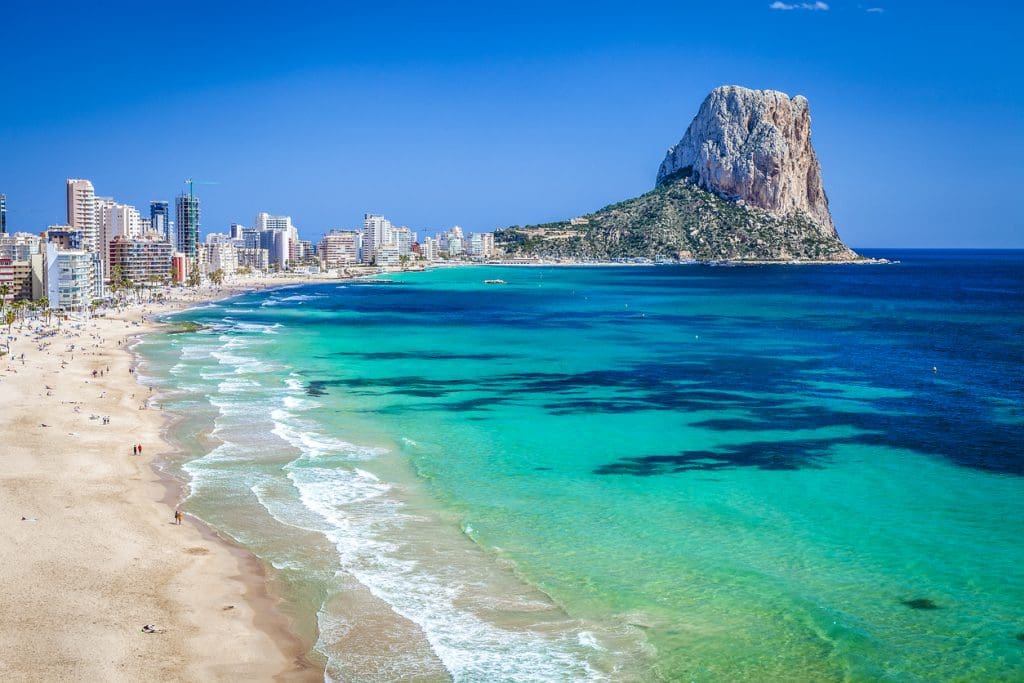
The Costa Blanca enjoys one of the most stable and enjoyable climates in Europe, thanks to its Mediterranean location, coastal influence, and surrounding mountain ranges. Whether you visit coastal towns like Alicante, Benidorm, Altea, Calpe, Jávea, Denia, Moraira, Villajoyosa, or Torrevieja, the weather remains consistently pleasant throughout the year, with only gentle seasonal variations.
Below is a month-by-month breakdown of Costa Blanca weather to help travelers choose the best time to visit.
January – Mild Winter Sunshine
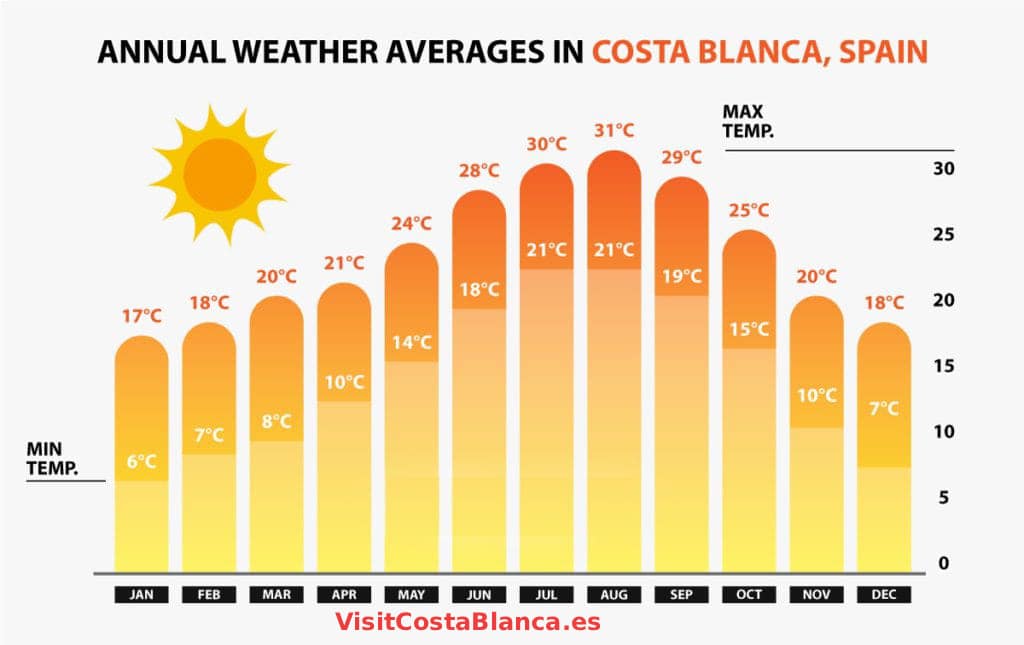
January is one of the mildest winter months in Spain. Daytime temperatures across Costa Blanca towns typically range between 12–18°C, with plenty of sunshine. While evenings can be cool, days are ideal for walking, sightseeing, and exploring historic towns without crowds.
Best for: city breaks, hiking, cultural travel, long stays
Rainfall: Low to moderate
February – Calm, Bright & Comfortable
February continues the mild winter pattern, with slightly increasing daylight hours. Coastal towns benefit from sea protection, keeping temperatures pleasant and frost-free. Almond blossoms begin to appear inland, adding natural beauty to the region.
Best for: photography, outdoor markets, relaxed holidays
Rainfall: Light and occasional
March – Spring Begins
March marks the start of spring, with temperatures rising to 16–20°C. The weather becomes noticeably brighter, and landscapes turn greener after winter rains. Coastal walks and mountain excursions become increasingly popular.
Best for: nature lovers, hiking, cycling
Rainfall: Short, scattered showers
April – Warm Days, Fresh Evenings
April offers some of the most balanced weather of the year. Daytime temperatures often reach 18–22°C, while evenings remain comfortable. Towns like Altea, Jávea, and Denia feel particularly pleasant, with clear skies and fresh sea breezes.
Best for: sightseeing, village exploration, Easter travel
Rainfall: Occasional, brief
May – Early Summer Feel
May feels like early summer across Costa Blanca. Temperatures climb to 22–26°C, and the sea begins to warm. Beaches become livelier, though still not overcrowded. This is a favorite month for travelers seeking sunshine without peak-season heat.
Best for: beach walks, swimming, outdoor dining
Rainfall: Very low
June – Perfect Mediterranean Weather
June brings long sunny days and temperatures around 26–30°C, moderated by coastal breezes. Sea temperatures are ideal for swimming, and towns come alive with festivals and evening promenades.
Best for: beach holidays, water sports, family travel
Rainfall: Rare
July – Hot & Dry Summer
July is hot and reliably sunny across all Costa Blanca towns. Daytime highs range from 30–34°C, especially inland, while coastal areas remain slightly cooler due to sea winds. Rainfall is extremely rare.
Best for: beach lovers, nightlife, festivals
Rainfall: Almost none
August – Peak Summer Heat
August is the hottest and busiest month. Temperatures can exceed 35°C inland, while coastal towns remain more comfortable. Warm sea temperatures and long daylight hours define this peak holiday period.
Best for: swimming, boating, summer events
Rainfall: Minimal
September – Warm & Relaxed
September combines summer warmth with fewer crowds. Temperatures settle between 26–30°C, and the sea remains warm. It’s one of the most pleasant months for extended stays and relaxed beach time.
Best for: couples, beach holidays, sailing
Rainfall: Low
October – Soft Autumn Sunshine
October brings cooler yet still warm days, averaging 22–26°C. Sea temperatures remain inviting, and the pace of life slows across the towns. Occasional short rain showers may occur but rarely disrupt travel plans.
Best for: sightseeing, hiking, photography
Rainfall: Moderate but brief
November – Mild & Peaceful
November transitions into a mild winter, with temperatures around 18–22°C. Sunshine remains frequent, especially along the coast. This is an excellent month for visitors looking to escape colder northern climates.
Best for: long stays, walking, cultural trips
Rainfall: Slightly higher than summer
December – Bright Winter Escape
December offers mild winter days with temperatures between 14–18°C. While evenings are cooler, daytime sunshine allows for outdoor activities, festive markets, and coastal strolls.
Best for: winter sun breaks, Christmas travel
Rainfall: Occasional
Weather Differences Between Costa Blanca Towns
- Coastal towns (Alicante, Benidorm, Calpe, Torrevieja) enjoy slightly warmer winters and cooling sea breezes in summer
- Northern towns (Jávea, Denia) may receive slightly more rain but also enjoy lush greenery
- Mountain-protected towns (Benidorm, Altea) benefit from reduced wind and stable temperatures
Despite these variations, the climate remains favorable across the entire region year-round.
Why Costa Blanca Weather Is Ideal for Travel
- Over 300 days of sunshine per year
- Mild winters and manageable summer heat
- Low rainfall compared to most of Europe
- Perfect conditions for outdoor living and tourism
This climate consistency is a key reason Costa Blanca is popular with holidaymakers, retirees, and long-term visitors.